
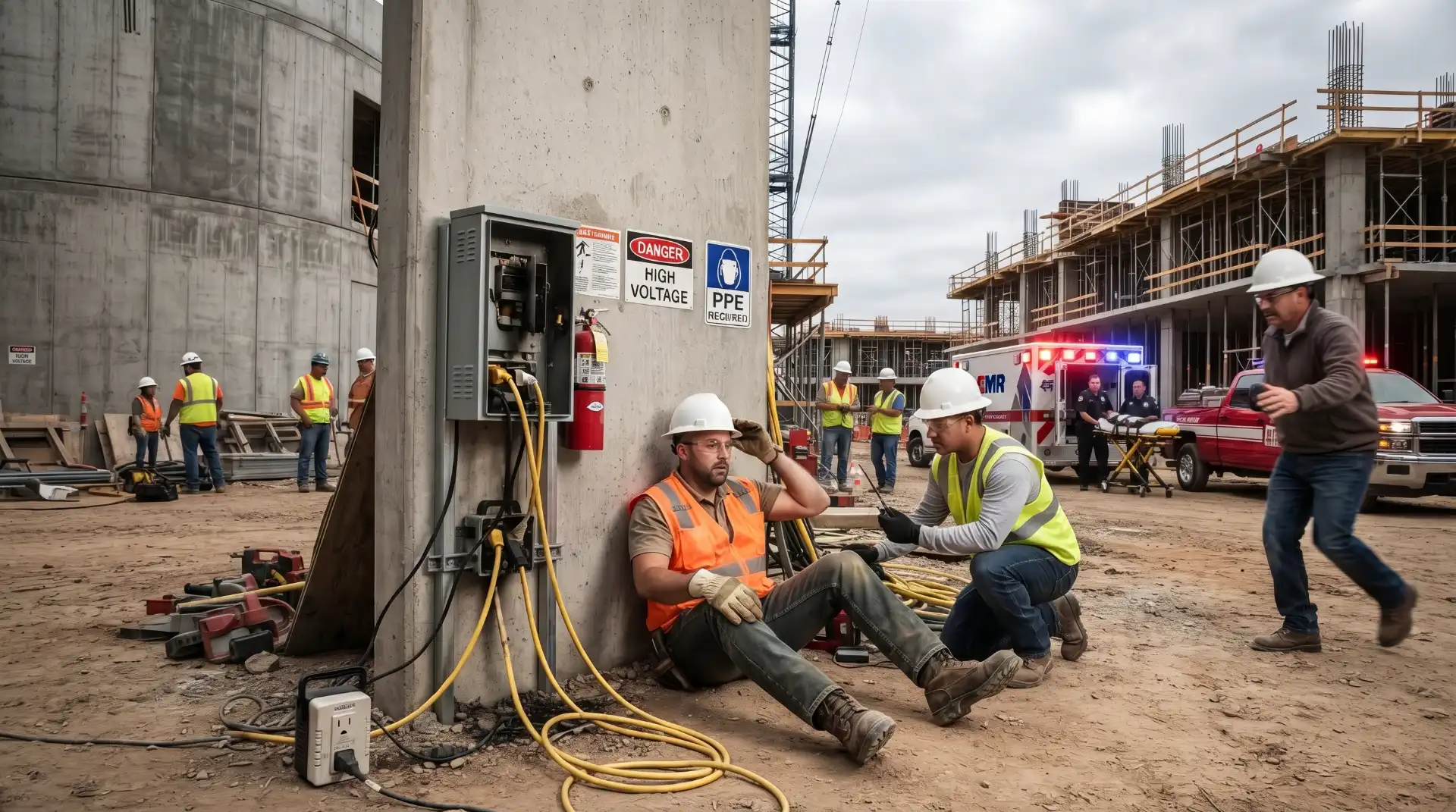
Electrical hazards are present in many American workplaces, from construction sites and manufacturing plants to warehouses, utility operations, maintenance departments, commercial buildings, and agricultural facilities. Although electricity is part of everyday work, contact with an energized source can cause severe burns, nerve damage, heart problems, falls, traumatic injuries, permanent disabilities, or death.
Workplace electrocution accidents can happen to electricians and other employees who work directly with electrical systems, but electrical injuries are not limited to electrical professionals. Construction workers may encounter overhead or underground power lines. Maintenance employees may come into contact with energized machinery. Warehouse employees can be exposed to damaged cords or electrical equipment. Even workers performing ordinary tasks may be injured when electrical systems are improperly maintained or when hazardous energy is not adequately controlled.
The Occupational Safety and Health Administration, commonly known as OSHA, identifies electrical hazards as a serious workplace safety concern. OSHA notes that common electrical hazards include contact with power lines, inadequate ground-fault protection, missing or discontinuous paths to ground, improperly used equipment, and improper use of extension and flexible cords. Electrical incidents can also occur during maintenance when hazardous energy is not properly isolated.
For an employee injured by electricity while performing job duties, workers’ compensation may provide an important source of medical and wage-related benefits. However, the exact rules governing workers’ compensation claims vary by state. The circumstances of the accident, the worker’s employment relationship, the severity of the injury, and whether another company contributed to the incident can all affect the legal issues involved.
Understanding how workplace electrocution accidents happen and what workers’ compensation may cover can help injured employees recognize important steps after an electrical injury.
What Is a Workplace Electrocution Accident?
An electrocution accident occurs when exposure to electrical energy causes fatal injury. Electrical accidents can also produce serious nonfatal injuries, including electrical shock, burns, cardiac problems, neurological damage, muscle damage, fractures, and injuries caused by falling after contact with electricity.
The terms “electric shock” and “electrocution” are sometimes used interchangeably in everyday conversation, but they are not identical. An electric shock occurs when electrical current passes through the body. The severity can vary considerably depending on the circumstances. Electrocution refers specifically to death resulting from electrical exposure.
A workplace electrical accident may involve direct contact with an energized conductor, indirect contact through equipment, an electrical arc or arc flash, or contact between machinery and an overhead power line. In some incidents, electricity causes a worker to lose muscle control or consciousness and fall from a ladder, roof, scaffold, lift, or elevated platform. The resulting injuries may therefore involve both electrical trauma and secondary physical trauma.
The danger is not limited to high-voltage electrical systems. OSHA specifically warns that low-voltage systems can still create dangerous arc-flash conditions. The agency explains that even 120/208-volt systems can generate an arc with enough energy to cause severe burns or ignite clothing.
Because electrical incidents can create multiple types of injuries at once, a workers’ compensation claim may involve extensive medical treatment and documentation.
How Do Workplace Electrocution Accidents Happen?
Electrical workplace accidents can have many causes. Some involve direct contact with energized components, while others happen because equipment, work areas, or safety procedures failed to adequately protect employees.
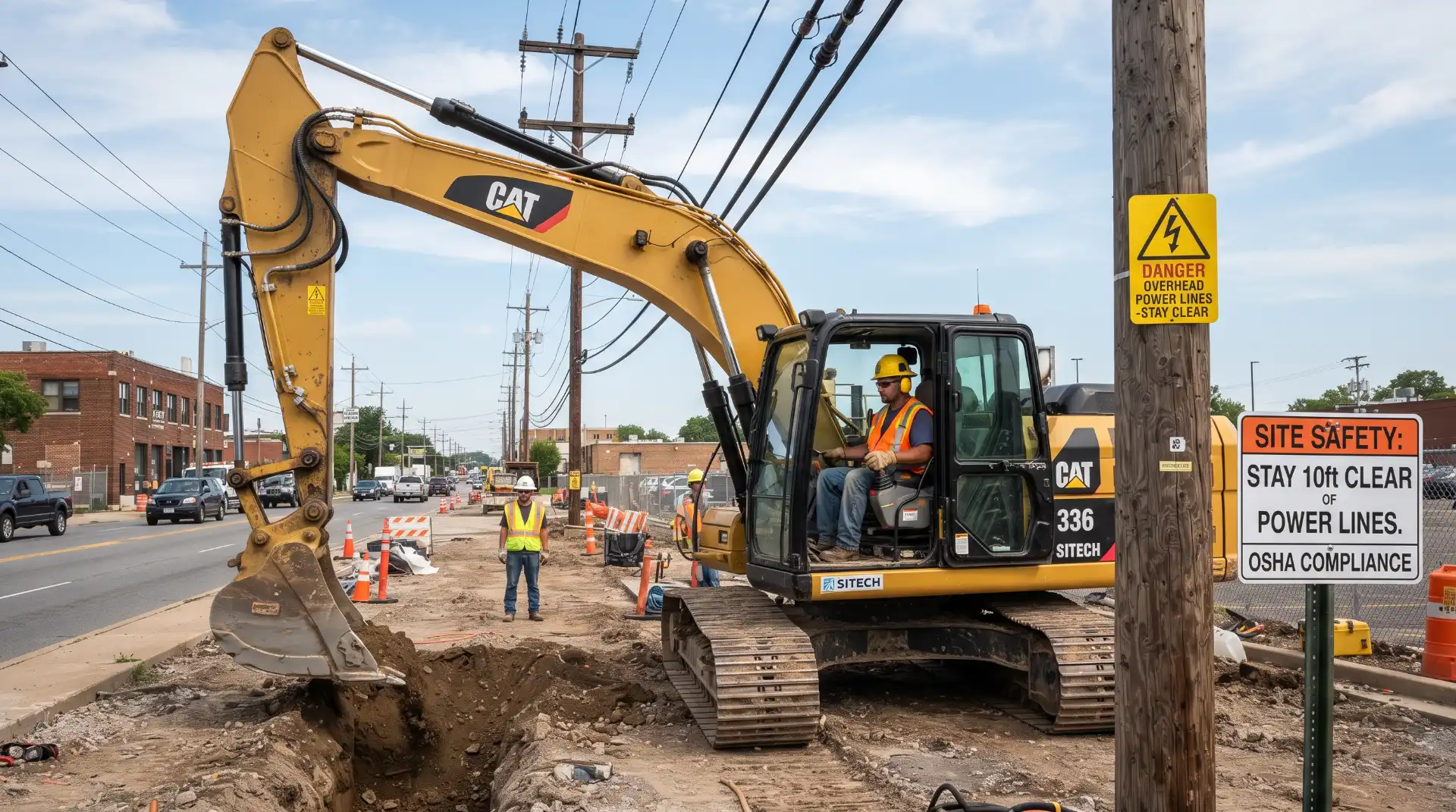
One of the most recognizable hazards involves overhead power lines. Construction workers operating cranes, bucket trucks, ladders, scaffolding, lifts, or other equipment may be exposed when machinery or materials come too close to energized lines. Workers digging or excavating may also encounter underground electrical lines when their locations have not been properly identified.
OSHA identifies contact with power lines as one of the frequent causes of electrical injuries in construction. The risks can be especially serious because power lines may carry extremely high voltage, and an employee does not necessarily have to make direct physical contact with a line for dangerous electrical energy to become involved in an incident.
Electrical equipment that has not been properly grounded can create another serious hazard. Grounding provides a path for electrical current and can help reduce the danger associated with faults. When grounding systems are defective, missing, or improperly installed, employees may face increased exposure to electrical current.
Damaged extension cords and flexible cords can also create hazards. Frayed insulation, exposed conductors, damaged plugs, improper connections, and overloaded electrical equipment can increase the risk of shocks, burns, fires, and other injuries.
Maintenance and repair work presents another significant risk. Employees may need to service machinery, electrical panels, production equipment, motors, automated systems, or other equipment containing hazardous energy. If energy is not properly isolated before work begins, the machine may unexpectedly start or release stored energy.
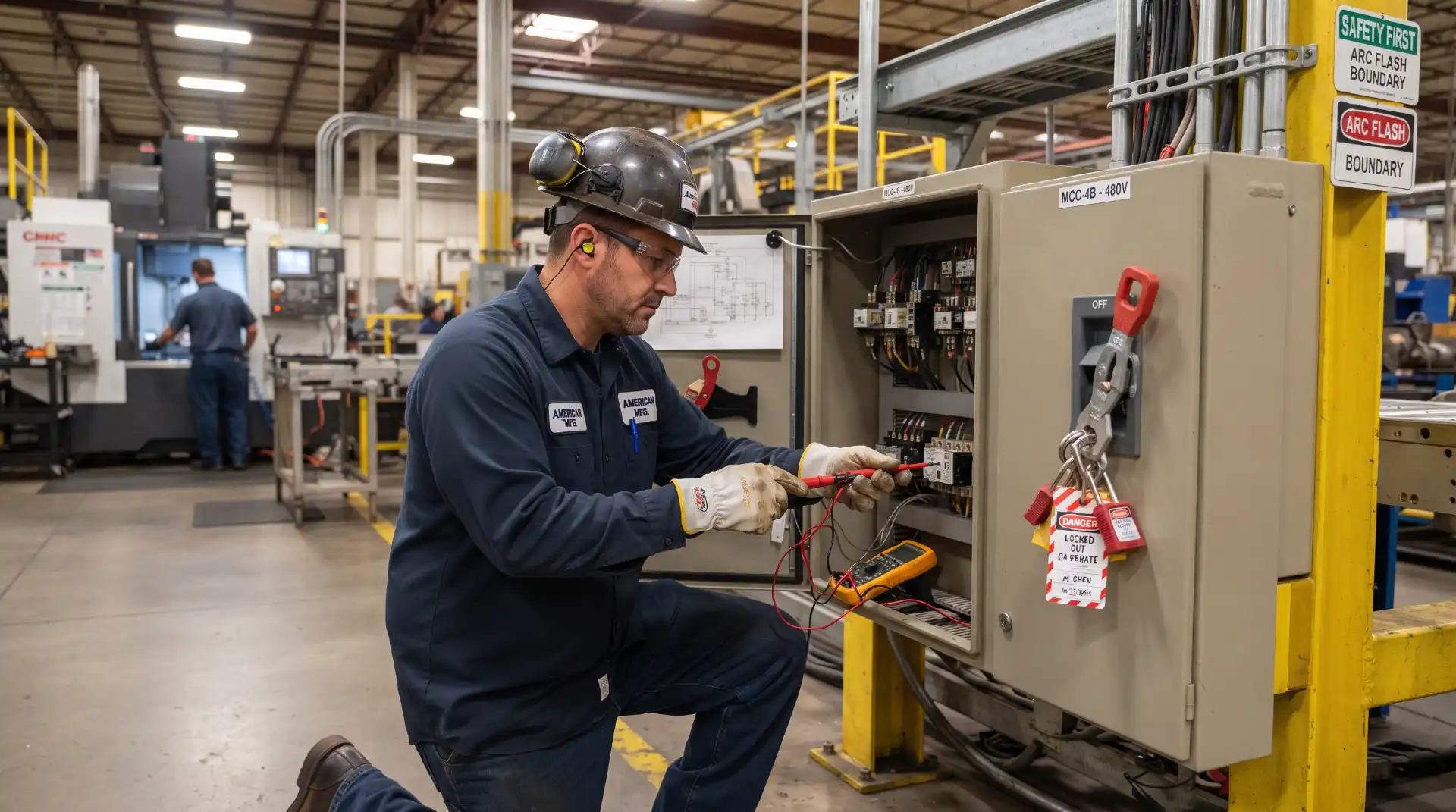
Lockout/tagout procedures are designed to control hazardous energy during servicing and maintenance. OSHA explains that hazardous energy can include electrical, mechanical, hydraulic, pneumatic, chemical, thermal, and other forms of energy. A failure to control hazardous energy can result in electrocution, burns, crushing injuries, amputations, fractures, and other serious harm.
Electrical Injuries Can Be More Serious Than They Initially Appear
One challenge after an electrical accident is that the visible injury may not reflect the full extent of the damage.
A worker may have relatively limited marks on the skin while suffering deeper tissue damage. Electrical current can affect muscles, nerves, blood vessels, and other internal structures. Depending on the path of the current through the body, an electrical injury may also affect the heart or nervous system.
Burn injuries are another common concern. An electrical accident can cause both entry and exit wounds, as well as deeper tissue damage. An arc flash can produce severe thermal injuries even when the worker does not directly touch an electrical conductor.
Electrical accidents may also cause workers to fall. A person who receives an electrical shock while working from a ladder or elevated platform may lose balance and fall to the ground. A worker on a roof, scaffold, or construction lift may experience a particularly serious secondary injury.
For this reason, medical evaluation is important even when an employee initially believes the injury is minor. Medical professionals can evaluate the worker and document the nature and extent of the injury.
Workers should also tell medical providers that the injury occurred at work. Accurate medical records can become important evidence when an employer or workers’ compensation insurer later evaluates the claim.
Does Workers’ Compensation Cover Electrocution Injuries?
In general, workers’ compensation systems are designed to provide benefits for qualifying injuries and illnesses arising out of employment. Workplace electrocution accidents can fall within workers’ compensation coverage when an employee is injured while performing work-related duties and the applicable state requirements are satisfied.
Workers’ compensation is primarily a state-regulated system in the United States, meaning the specific rules can differ depending on where the employee works. Requirements concerning notice, medical treatment, claim filing, disability benefits, disputes, and appeals are not identical across the country.
An employee generally does not have to prove ordinary employer negligence to establish a basic workers’ compensation claim. This is one of the fundamental differences between workers’ compensation and a traditional negligence lawsuit.
The focus is usually on whether the injury is covered by the applicable workers’ compensation system and whether it arose out of and occurred in the course of employment.
For example, an electrician who suffers an electrical injury while performing assigned electrical work may have a straightforward work-related injury issue. A construction worker injured after equipment contacts an overhead power line may also have a potentially compensable workplace accident.
However, every claim depends on its particular facts and the law of the relevant state.
Workers who are uncertain about coverage should avoid assuming that an employer’s description of the accident determines whether benefits are available. The circumstances should be documented and evaluated under the applicable workers’ compensation rules.
What Workers’ Compensation Benefits May Be Available?
The benefits available after a workplace electrocution accident depend on state law and the circumstances of the claim. Potential benefits can include reasonable and authorized medical treatment, temporary disability benefits, permanent disability benefits, vocational rehabilitation or related services, and death benefits for eligible surviving family members in fatal cases.
Medical benefits can be particularly important after an electrical accident because treatment may continue for an extended period. Depending on the injury, a worker may require emergency treatment, hospitalization, surgery, burn care, neurological evaluation, cardiac monitoring, physical therapy, occupational therapy, medication, follow-up appointments, or rehabilitation.
Some electrical injuries may also result in long-term limitations. A worker who previously performed physically demanding work may be unable to return to the same position after sustaining permanent nerve damage, severe burns, mobility problems, or other lasting injuries.
Temporary disability benefits may be available when an employee is unable to work during recovery, although the amount and eligibility requirements vary by state.
Permanent disability benefits may become relevant when an injury leaves lasting functional limitations. The method used to evaluate permanent disability differs among state workers’ compensation systems.
Because benefits and procedures vary significantly, employees should examine the rules applicable to the state where the injury occurred rather than relying on a general national assumption.
Reporting a Workplace Electrocution Accident
Promptly reporting a workplace electrical accident is one of the most important practical steps an injured employee can take.
Employees should follow their employer’s established injury-reporting procedure while also making sure the report accurately describes what happened. A report should identify when and where the accident occurred, what task the worker was performing, what equipment or electrical source was involved, and what symptoms or injuries resulted.
A worker should not minimize an electrical injury simply because the symptoms initially appear manageable. Some injuries may become more apparent as time passes.
Written documentation can help establish a timeline. Employees should keep copies of accident reports and other communications when possible.
The site’s existing guide, What to Do After a Workplace Injury: A Complete Guide, provides additional information about reporting an injury, seeking medical treatment, documenting the accident, and beginning a workers’ compensation claim.
Why Medical Documentation Matters After an Electrical Accident
Medical records can play an important role in a workplace electrocution claim because they document both the injury and the treatment required.
After an electrical accident, an employee should explain the circumstances to the medical provider as accurately as possible. The medical record should identify that the incident was work-related when appropriate and document the symptoms, diagnosis, treatment recommendations, restrictions, and follow-up care.
Employees should keep records of medical appointments, prescriptions, diagnostic tests, therapy, hospital visits, and other treatment related to the injury.
Consistency can also matter during a workers’ compensation claim. If a doctor recommends follow-up treatment, therapy, or restrictions, the employee should understand those instructions and follow them unless another medical professional provides different guidance.
An employee who believes that a medical evaluation did not fully address the injury may want to discuss continuing symptoms with a healthcare provider. Electrical injuries can involve complex medical issues, and appropriate medical documentation can help clarify the extent of the injury.
What Evidence Can Help Support an Electrocution Claim?
Evidence can be especially valuable when the circumstances surrounding an electrical accident are disputed.
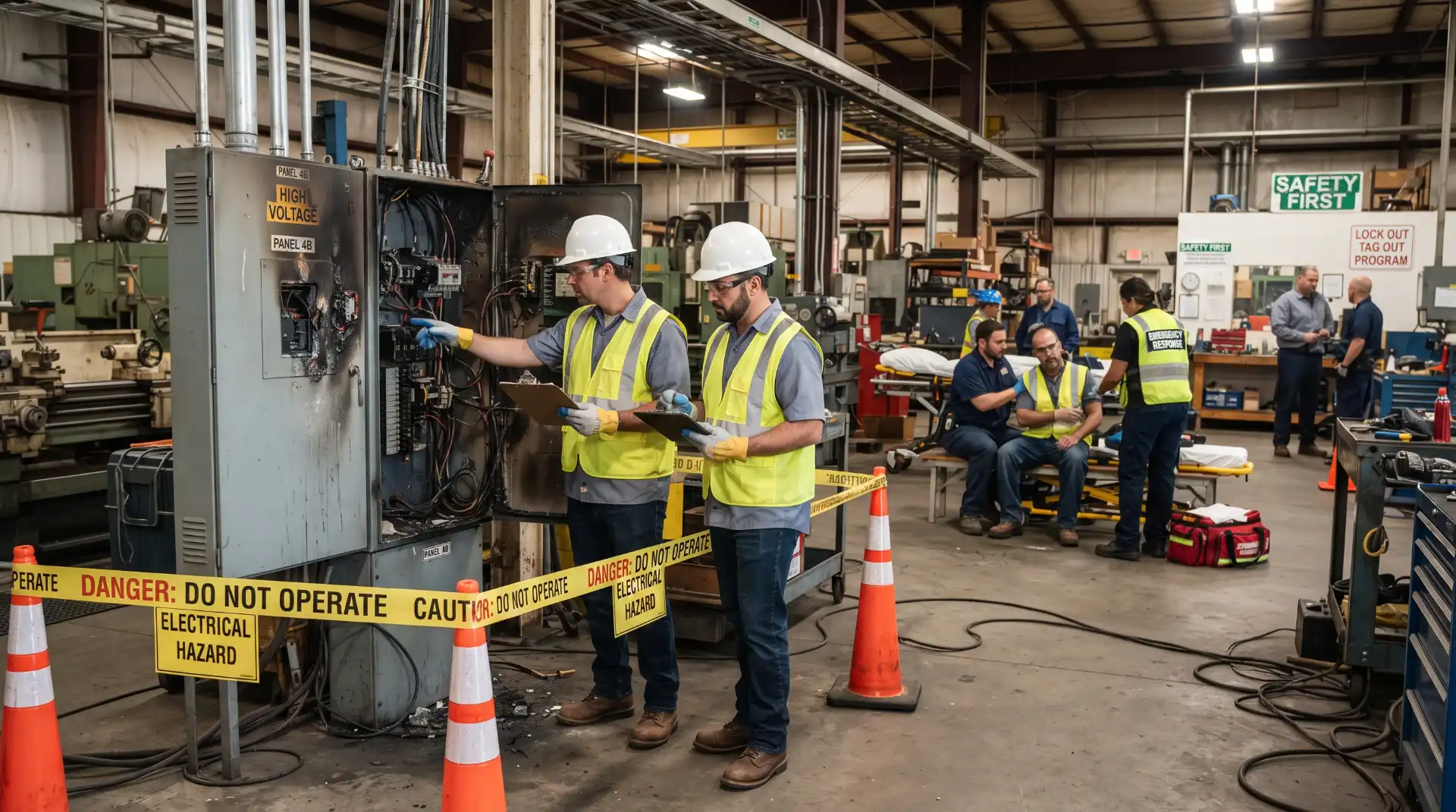
Photographs of the accident scene may show damaged equipment, exposed wiring, missing guards, electrical panels, power lines, warning signs, work areas, tools, or other conditions relevant to the incident.
Witness information can also be important. Coworkers, supervisors, contractors, or other people present at the time of the accident may have observed what happened or may know about previous electrical problems.
Maintenance records may provide additional information. Depending on the circumstances, records relating to inspections, repairs, electrical testing, equipment maintenance, safety meetings, training, or lockout/tagout procedures could become relevant.
An employee should not personally handle damaged electrical equipment simply to preserve evidence. Electrical equipment can remain dangerous after an accident, and investigating energized equipment should be left to qualified professionals.
The site’s existing article, How to Prove Your Work Injury Claim: A Step-by-Step Guide, discusses the importance of reporting, medical records, photographs, witness information, and other documentation in a workplace injury claim.
Can an Employer Be Responsible for an Electrical Hazard?
Workers’ compensation generally does not require an injured employee to prove ordinary employer negligence before receiving covered benefits. However, the facts surrounding employer safety practices can still be important in understanding how an accident occurred and whether other legal claims may exist.
Workplace electrical safety involves numerous potential responsibilities, depending on the industry and the specific task.
Employers may need to provide appropriate safety procedures, training, equipment, protective measures, and hazard controls required by applicable law. OSHA has electrical requirements addressing areas such as electrical installations, construction work, hazardous energy, and work around energized equipment.
For construction activities, OSHA regulations require protection for employees who could come into contact with electrical circuits. Depending on the circumstances, protection may involve deenergizing and grounding circuits or effectively guarding employees through insulation or other means.
The particular OSHA standard applicable to an incident depends on the industry, equipment, job duties, and circumstances. A violation of an OSHA rule may be relevant evidence, but an OSHA violation does not automatically determine whether a worker receives workers’ compensation benefits.
OSHA Electrical Safety Rules and Workplace Injuries
OSHA maintains specific standards addressing electrical hazards in general industry, construction, and other regulated workplaces.
The agency’s electrical safety resources explain that workplace electrical hazards can involve direct and indirect exposure to electrical energy. OSHA also provides standards and guidance concerning grounding, wiring, electrical equipment, power lines, lockout/tagout, protective equipment, and safe work practices.
Employers and workers can review OSHA’s Electrical Safety and Health Topics resources for authoritative information about electrical hazards and applicable workplace safety requirements.
OSHA’s construction standards also address employee protection around electrical circuits. For example, construction regulations require employers to protect employees who could contact electrical power circuits during their work.
Electrical safety standards are important because many workplace electrocution accidents involve preventable hazards such as exposed energized components, inadequate protection, unsafe equipment, or failure to properly control energy.
For an injured worker, however, the existence of an OSHA investigation or safety violation is only one part of the overall legal picture. Workers’ compensation eligibility is determined under the applicable state system.
What Is Lockout/Tagout and Why Does It Matter?
Lockout/tagout, commonly abbreviated as LOTO, is an important safety concept in many industrial and maintenance workplaces.
The purpose of lockout/tagout is to prevent machinery or equipment from unexpectedly starting or releasing hazardous energy while employees are performing servicing or maintenance.
Electrical energy is one type of hazardous energy covered by OSHA’s hazardous-energy requirements. Depending on the equipment, other forms of energy may also be present.
For example, a maintenance employee could disconnect electrical power to a machine but still face mechanical or hydraulic energy stored within the system. Effective energy-control procedures must account for the hazards associated with the equipment being serviced.
OSHA states that failure to properly control hazardous energy can cause serious or fatal injuries, including electrocution, burns, crushing, amputations, and fractures.
An electrical accident occurring during maintenance may therefore require an investigation into the equipment, energy-control procedure, employee training, maintenance practices, and circumstances surrounding the incident.
Can a Worker Receive Workers’ Compensation After an Arc Flash?
An arc flash can produce extremely high temperatures and intense energy over a very short period. A worker exposed to an arc flash may suffer burns, hearing damage, eye injuries, respiratory problems, or other trauma.
Arc-flash incidents can occur when electrical equipment fails, an electrical fault occurs, conductive material bridges energized components, or an employee is exposed to an energized system during work.
OSHA emphasizes that even relatively low-voltage systems can create dangerous arc-flash conditions. The agency also states that electrical parts that have been deenergized but have not been properly locked out or tagged must be treated as energized under applicable requirements.
A worker injured by an arc flash while performing job duties may have a workers’ compensation claim if the injury meets the applicable state requirements.
The medical consequences of an arc flash can be substantial. A worker may require burn treatment, reconstructive procedures, rehabilitation, psychological care, vision treatment, hearing evaluation, or other medical services depending on the injuries.
What Happens If a Worker Falls After an Electrical Shock?
A workplace electrical accident does not have to produce a direct burn or visible electrical injury to result in a serious workers’ compensation claim.
A worker may receive an electrical shock, lose balance, and fall from an elevated location. The resulting injury could include a broken bone, spinal injury, traumatic brain injury, internal injury, or other physical trauma.
The legal analysis may still begin with the electrical exposure because it may have triggered the fall.
This is particularly important on construction sites, where workers may perform electrical or other tasks from ladders, scaffolds, roofs, lifts, and elevated platforms.
Evidence should establish the sequence of events as clearly as possible. If a worker was shocked and then fell, witnesses and medical records may help document the relationship between the electrical event and the resulting physical injury.
Can a Workplace Electrical Accident Lead to a Third-Party Claim?
Workers’ compensation may not be the only potential legal issue after an electrical workplace accident.
Depending on state law and the circumstances, an injured employee may have a separate claim against a third party whose conduct or defective product contributed to the accident.
A third party could potentially include an equipment manufacturer, subcontractor, property owner, maintenance company, electrical contractor, or another business that was not the injured worker’s employer.
For example, suppose an employee is injured because a machine supplied by another company contains a defect. A workers’ compensation claim against the employer may be one part of the situation, while a potential product-liability claim could raise separate questions involving the manufacturer or supplier.
Similarly, if an outside contractor creates an electrical hazard that injures an employee of another company, the facts may require examination of potential third-party responsibility.
Not every accident involving another company creates a valid third-party lawsuit. Liability depends on the facts and applicable state law.
This is one reason why preserving evidence and identifying every business involved in the workplace can be important after a serious electrical accident.
What If the Workers’ Compensation Claim Is Denied?
A workers’ compensation claim may be disputed for different reasons. An insurer might question whether the accident occurred during employment, whether the injury is connected to the workplace incident, whether required notice was provided, or whether medical evidence supports the claimed condition.
A denial does not necessarily mean that an injured worker has no further options.
The appropriate response depends on the state’s workers’ compensation system and the reason for the denial. An employee should carefully review any written denial and identify the deadlines and procedures for challenging the decision.
The existing Work Injury Attorney article, Navigating the Appeals Process for Denied Workers’ Compensation Claims, discusses common issues that may arise after a workers’ compensation denial, including gathering supporting documentation, understanding appeal deadlines, and preparing for a hearing.
Because deadlines differ from state to state, employees should not assume that they have unlimited time to challenge a denial.
Fatal Workplace Electrocution Accidents
Some workplace electrical accidents are fatal. According to the U.S. Bureau of Labor Statistics, the United States recorded 142 fatal occupational injuries involving exposure to electricity in 2023. The 2024 BLS fatal occupational injury data recorded 511 fatal injuries from direct exposure to electricity, indirect exposure to electricity, and exposure to electric arc when broken down by the relevant event categories in its detailed table.
Fatal electrical accidents can affect entire families because the worker may have been the primary source of household income.
Workers’ compensation systems generally include death benefits for eligible surviving dependents when a covered workplace injury results in death. The specific benefits, eligibility rules, payment structure, and filing procedures depend on state law.
A fatal electrical accident may also prompt investigations by OSHA or other agencies. Investigators may examine the workplace, equipment, safety procedures, employee training, maintenance history, and other factors surrounding the incident.
For families dealing with a fatal workplace electrocution, the legal process can involve both workers’ compensation issues and, depending on the circumstances, potential third-party claims.
Industries Where Electrical Hazards Are Common
Electrical hazards can occur in nearly any industry, but some occupations involve particularly frequent exposure to electrical systems or environments.
Construction workers may encounter overhead power lines, temporary electrical systems, generators, tools, wiring, panels, and electrical equipment. Electricians and utility workers may work directly with energized systems or electrical infrastructure.
Manufacturing employees may encounter electrical panels, motors, automated production systems, robotics, conveyors, machinery, and industrial controls. Maintenance workers may face electrical hazards while repairing or servicing equipment.
Telecommunications and utility-related workers can encounter power lines and electrical infrastructure while performing installation or maintenance activities.
Agricultural workers may also encounter electrical hazards involving irrigation systems, pumps, machinery, barns, electrical equipment, and overhead lines.
Warehouse and distribution employees can face electrical hazards involving charging systems, machinery, damaged cords, automated equipment, and maintenance activities.
The presence of an electrical hazard does not mean an accident will occur, but it demonstrates why electrical safety procedures and training remain important across many American workplaces.
How Workers Can Protect Their Rights After an Electrical Accident
After a workplace electrocution or electrical injury, the employee’s immediate priority should be obtaining appropriate medical care and making sure the accident is reported through the required workplace channels.
The employee should document what happened while the details are still fresh. This may include the location, equipment involved, task being performed, coworkers present, safety procedures being followed, and circumstances immediately before and after the incident.
Employees should preserve copies of relevant records whenever possible. These may include accident reports, medical records, work restrictions, correspondence from the employer or insurer, and information about the workers’ compensation claim.
If the accident involved a machine, contractor, defective product, power line, or other outside party, workers should avoid making assumptions about who may be legally responsible. Instead, the circumstances should be investigated carefully.
An employee may also want to understand the workers’ compensation deadlines that apply in the state where the injury occurred. Waiting too long to report an injury or file required paperwork can create avoidable complications.
Frequently Asked Questions About Workplace Electrocution Accidents
Can I receive workers’ compensation after an electrical shock at work?
A qualifying work-related electrical injury may be covered by workers’ compensation. Eligibility and benefits depend on the applicable state law, the employment relationship, and the circumstances of the accident.
Does an electrical injury have to cause a burn to qualify?
No. Electrical exposure can cause injuries that do not involve obvious external burns. A worker may experience neurological, cardiac, muscular, or other medical problems, or may suffer a secondary injury such as a fall.
Can I receive workers’ compensation if I was injured by an electrical machine?
Potentially. If the injury occurred during covered employment and satisfies the applicable state requirements, workers’ compensation may apply. The specific circumstances should be evaluated under the relevant state law.
What if my employer says the accident was my fault?
Workers’ compensation generally operates differently from a traditional negligence lawsuit. In many systems, an employee does not have to prove ordinary employer negligence to obtain basic workers’ compensation benefits. However, individual state laws contain important exceptions and requirements.
Can I sue another company after an electrical workplace accident?
Possibly. A third-party claim may be available in certain circumstances when someone other than the employer contributed to the injury. Whether such a claim exists depends on the facts and applicable state law.
What should I do if my workers’ compensation claim is denied?
Review the written denial carefully and determine why the claim was denied. Workers should pay close attention to state-specific appeal deadlines and procedures. Additional medical records, accident evidence, witness information, or other documentation may be relevant to a dispute.
How long do workplace electrical injury claims take?
There is no universal timeline. Straightforward claims may resolve relatively quickly, while serious injuries, disputed medical treatment, permanent disability, or contested liability can make a claim substantially more complicated.
Final Thoughts on Workplace Electrocution Accidents
Workplace electrocution accidents can have consequences that extend far beyond the moment of the electrical incident. A worker may face burns, nerve damage, cardiac complications, neurological problems, fractures, traumatic injuries from falls, permanent disability, or other serious medical conditions.
Workers’ compensation can provide an important system for addressing qualifying job-related injuries. Depending on state law, benefits may help with medical treatment, wage replacement, disability, rehabilitation, and other covered losses.
At the same time, serious electrical accidents may involve more complicated questions. An investigation may need to determine whether equipment was defective, whether hazardous energy was properly controlled, whether an outside contractor contributed to the incident, or whether another third party may have legal responsibility.
OSHA’s electrical safety requirements provide important workplace protections, but workers’ compensation rights are governed primarily by state law. This means that employees should pay attention to the rules, deadlines, and procedures applicable where they work.
The most important steps after an electrical workplace accident generally involve obtaining appropriate medical attention, reporting the accident promptly, preserving relevant documentation, following medical instructions, and understanding the workers’ compensation process that applies to the claim.
For workers dealing with a serious electrical injury, having accurate information about the claims process can make it easier to understand what comes next and what documentation may be important.
This article provides general educational information about workplace electrocution accidents and workers’ compensation in the United States. Workers’ compensation laws and procedures vary by state, and this article is not a substitute for legal advice about an individual claim.