
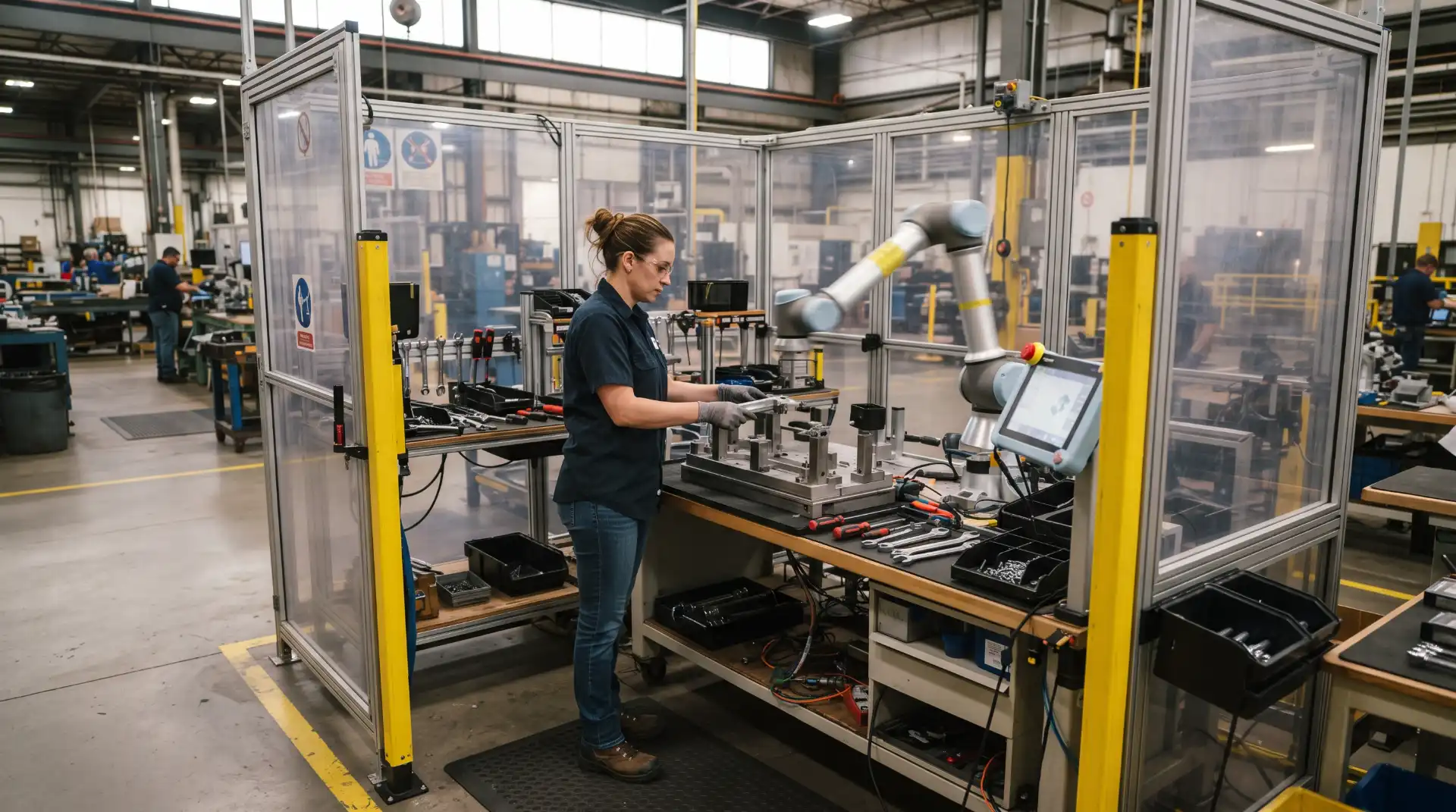
Robots are changing warehouses and manufacturing facilities across the United States. Industrial robots now assemble products, weld components, move materials, load machines, sort packages, and perform repetitive tasks. Collaborative robots, commonly called cobots, operate closer to employees and may share the same work areas. Although robotics can reduce exposure to some dangerous tasks, interaction between people and automated equipment may introduce different workplace hazards.
The National Institute for Occupational Safety and Health, or NIOSH, identifies struck-by accidents, caught-between incidents, crushing, trapping, electrical hazards, and slip-and-fall risks among the potential dangers associated with workplace robots.
For an employee injured by robotic equipment, determining what happened may require more than examining the physical accident scene. The investigation may involve software, sensors, maintenance records, machine guarding, safety programming, equipment manufacturers, system integrators, contractors, and several companies operating within one facility.
Understanding these factors can help workers recognize the issues that may arise after a robot or cobot workplace accident.
Robots Are Becoming Part of Everyday Industrial Work
Industrial robots have been used in American manufacturing for decades. Traditionally, many operated inside fenced cells where employees remained physically separated from moving machinery.
Modern automation is different.
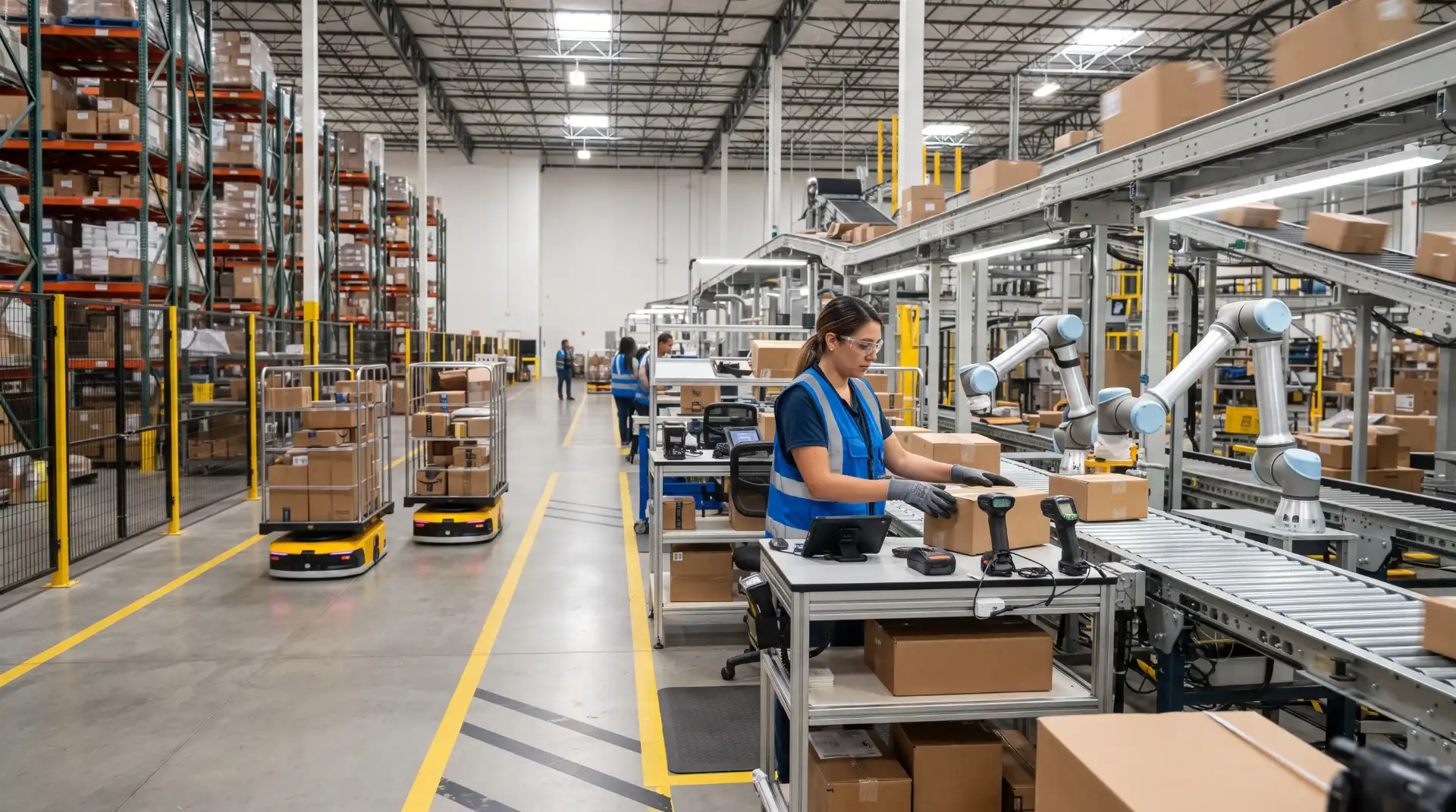
Warehouses increasingly use autonomous mobile robots to transport goods throughout fulfillment centers. Manufacturing facilities use robotic arms to load machines, assemble components, move products, weld materials, package goods, and perform inspections. Other robotic systems assist workers rather than replacing an entire task.
Collaborative robots are designed for applications involving closer interaction between humans and robotic equipment. Unlike traditional industrial robots that commonly operate behind physical barriers, cobots may work beside employees during production.
NIOSH notes that the number and capabilities of workplace robots are growing and that increased human interaction with robotic systems creates new occupational safety questions. The agency established its Center for Occupational Robotics Research to examine traditional industrial robots, collaborative robots, mobile robots, wearable robotics, autonomous vehicles, and future systems that incorporate artificial intelligence.
Robotics can provide meaningful safety benefits. A robot might handle extremely heavy materials, enter hazardous environments, perform repetitive movements, or complete tasks involving chemical, heat, or ergonomic exposures.
Those benefits do not eliminate every hazard. Instead, workplace risks may shift toward machine interaction, programming, maintenance, troubleshooting, and unexpected movement.
What Is the Difference Between an Industrial Robot and a Cobot?
Understanding the distinction between traditional industrial robots and collaborative robots can help explain why accidents may happen differently.
Traditional industrial robots typically perform programmed tasks within a controlled operating space. Depending on the application, physical barriers, gates, machine guarding, sensors, or other safeguards may separate employees from moving equipment.
A collaborative robot is used in an application designed for closer human interaction. Employees and cobots may perform related tasks within the same general production area.
OSHA explains that collaborative robot applications may require employees such as programmers, operators, or maintenance personnel to work within restricted spaces while some energy sources remain available. These environments can introduce hazards involving contact with the robot, surrounding machinery, equipment, or materials being handled by the robotic system.
The word “collaborative” should therefore not be interpreted to mean that an application is automatically free from hazards.
The actual level of risk depends on the robot, its programming, speed, force, tools, workpiece, operating environment, surrounding machinery, and the employee’s task.
Common Causes of Robot and Cobot Injuries
Robot accidents do not always occur during normal production.
OSHA specifically notes that many industrial robot accidents occur during non-routine conditions such as programming, maintenance, testing, setup, or adjustment. During these activities, workers may temporarily enter a robot’s working envelope, placing them closer to machinery that could move unexpectedly.
Several circumstances may contribute to an accident.
Unexpected Robot Movement
A robot may move unexpectedly while an employee is adjusting equipment, clearing a jam, checking a sensor, or performing maintenance.
Depending on the machine, even a short movement may expose a worker to substantial force.
A robotic arm might strike a worker, push someone into another machine, pin a person against a fixed structure, or cause material being handled by the robot to move unexpectedly.
Determining why the movement occurred may require examination of programming information, sensors, control systems, maintenance work, operator actions, and mechanical components.
Struck-By Accidents
Employees may be struck directly by a robotic arm, mobile robot, end-effector, or object being transported.
Automated mobile robots can present a different type of struck-by risk. These machines move through warehouse floors to transport products or materials without a human driver.
Sensors and collision-avoidance technology may help the machines navigate around people and obstacles. However, the surrounding environment remains relevant.
Congested aisles, blind corners, stored materials, temporary obstructions, unusual traffic patterns, or equipment malfunctions could contribute to an incident.
NIOSH lists struck-by hazards among the recognized risks associated with workplace robotics.
Crushing and Caught-Between Injuries
A worker may become trapped between robotic equipment and another object.
For example, an employee could be caught between a moving robot and shelving, a machine enclosure, a conveyor, a workstation, another robot, or manufacturing equipment.
These incidents can cause fractures, internal injuries, traumatic injuries, amputations, or other serious physical harm.
OSHA’s robotics guidance also recognizes situations where workers may be struck by one robot system while performing work near another system or become trapped between automated equipment and surrounding machinery.
Injuries During Maintenance and Repairs
Maintenance presents particular challenges because employees may need access to parts of robotic systems that remain inaccessible during normal operation.
Tasks may include replacing components, inspecting electrical systems, testing movement, correcting software issues, adjusting sensors, removing damaged materials, or cleaning equipment.
Workers may also need to enter a robot’s operating space.
OSHA identifies control of hazardous energy under 29 CFR 1910.147 among the standards related to robotic workplace safety. Machine guarding and electrical requirements may also apply depending on the equipment and work environment.
A maintenance accident may involve questions about whether equipment was properly isolated, whether stored energy remained in the system, and whether the worker had appropriate instructions for the task.
Programming and Testing Accidents
Programming robotic equipment sometimes requires employees to observe movement closely.
Testing may occur after software changes, equipment replacement, production adjustments, or maintenance.
A system could behave differently from what an employee expects because of programming errors, incorrect settings, sensor issues, or changes made during troubleshooting.
The investigation may need to examine the machine’s electronic history rather than focusing only on physical damage.
Software logs, error codes, access records, control settings, and programming changes can provide valuable information about events leading to an accident.
Falling or Dropped Materials
Robots commonly move boxes, automotive components, metal parts, machinery, containers, and other materials.
An employee may suffer injuries if a robotic gripper, clamp, suction device, or other end-effector loses control of an object.
The worker might be struck directly, or the dropped material could create secondary hazards.
Investigators may examine whether the end-effector was appropriate for the object, whether equipment was maintained properly, and whether the material exceeded operating limits.
Electrical Hazards
Robotic systems rely on electrical power, control cabinets, wiring, motors, batteries, sensors, and communications equipment.
Employees performing installation, repair, or maintenance may encounter electrical hazards in addition to mechanical risks.
An electrical incident could occur independently or trigger an unexpected equipment movement.
Electrical injuries can include burns, shocks, falls following electrical contact, and other trauma.
Slips, Trips, and Falls Around Automated Equipment
Not every robotics injury involves direct contact with the robot.
NIOSH includes slipping, tripping, and falling among potential hazards associated with robotic workplaces.
Warehouse floors may contain charging stations, equipment, temporary barriers, packages, cables, pallets, and constantly changing traffic patterns.
A worker attempting to avoid a mobile robot could also trip or collide with another object.
The site’s guide to common workplace injuries provides additional information about slips, falls, machine-related injuries, repetitive strain, and other occupational hazards.
What Injuries Can Robot Accidents Cause?
The severity of a robotic equipment injury depends on the type of equipment involved and the circumstances of the accident.
A worker struck by a lightweight cobot operating at limited force may face a different injury pattern from someone trapped by heavy industrial machinery.
Robot-related incidents can result in fractures, crush injuries, amputations, lacerations, head injuries, traumatic brain injuries, spinal injuries, burns, electrical injuries, soft-tissue injuries, and damage to internal organs.
Workers may also experience secondary injuries from falling after contact with equipment.
Some injuries appear immediately. Others become more noticeable after swelling, pain, or restricted movement develops.
Employees who experience an accident may benefit from documenting symptoms and obtaining appropriate medical evaluation according to their state’s workers’ compensation procedures.
Workers’ Compensation After a Robot Injury
Workers’ compensation generally serves as the primary system for addressing job-related employee injuries in the United States, although specific requirements differ by state.
A worker typically does not need to establish that the employer intentionally caused an accident merely to pursue ordinary workers’ compensation benefits.
Depending on applicable state law, benefits may address authorized medical treatment, part of lost earnings, rehabilitation, and disability resulting from a covered occupational injury.
Robotics cases may become complicated when several businesses participate in the design or operation of an automated workplace.
For example, a worker may be employed by one company while the robot belongs to another business. A third company may have installed the automation system, while another contractor performs maintenance.
Employees can learn more about general workplace claims in How to Prove Your Work Injury Claim.
Can a Third Party Be Responsible for a Robot Accident?
Workers’ compensation and third-party liability are separate legal concepts.
A third party is generally a person or company other than the injured worker’s employer.
Depending on state law and the circumstances, potential third parties in a robotics accident might include a robot manufacturer, component manufacturer, software provider, system integrator, maintenance contractor, outside operator, property company, or another contractor working at the facility.
The presence of another company does not automatically create a viable lawsuit. Evidence must connect that party’s conduct or product to the accident under applicable law.
A worker injured by defective robotic equipment, for example, might raise different legal questions from someone injured because a separate contractor improperly modified a machine.
Our article on how fault may be evaluated in a workplace injury case discusses evidence and third-party involvement in greater detail.
Product Liability Questions After a Robotics Accident
Some workplace accidents involve allegations that industrial equipment itself was defective.
Potential issues could involve mechanical components, safety sensors, control systems, emergency stops, guarding, mobile navigation systems, end-effectors, warnings, or other equipment.
Product liability laws vary among states.
An investigation may consider the condition of the equipment when it left the manufacturer, subsequent modifications, maintenance history, installation, programming changes, and the way the machine was being used when the accident occurred.
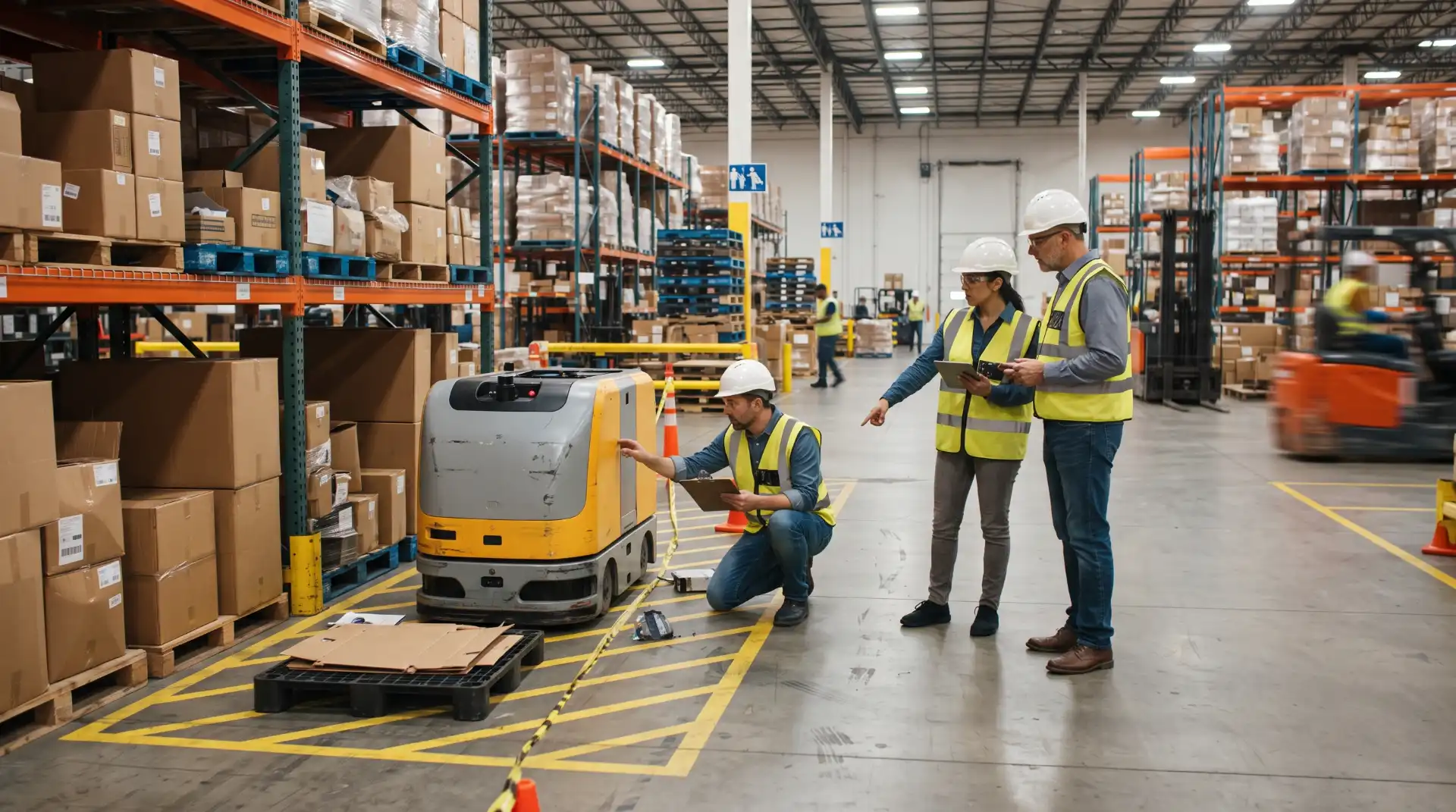
Preserving the equipment can become particularly relevant when a product defect is being investigated.
If damaged equipment is repaired, discarded, altered, or returned before an investigation, important evidence may become more difficult to examine.
Why Digital Evidence Matters in Robot Injury Cases
Traditional workplace injury investigations often rely on photographs, witnesses, maintenance records, and physical evidence.
Robot accidents can add a substantial digital component.
Modern equipment may record operating events, sensor readings, error codes, software changes, movement histories, warnings, shutdowns, or maintenance information.
Autonomous mobile robots might generate navigation records. Industrial equipment may record fault messages. Facility security cameras may show interactions between workers and automated machinery.
Digital information can sometimes help investigators reconstruct events occurring seconds before an accident.
Evidence that may become relevant includes robot event logs, software records, maintenance histories, inspection documents, surveillance footage, training records, work orders, photographs, equipment manuals, safety assessments, sensor data, and witness accounts.
The exact records available depend on the equipment and facility.
The Importance of Workplace Training
Workers interacting with robots may perform very different tasks.
An operator who loads materials into an automated production line may face risks different from those of a technician entering the robot cell to troubleshoot an error.
Training may therefore need to match the employee’s actual responsibilities.
Workers may need to understand operating boundaries, emergency procedures, machine guarding, hazardous energy controls, pedestrian routes, restricted areas, warning systems, and procedures for handling malfunctions.
Maintenance employees and programmers may require additional instruction because they sometimes work closer to moving machinery.
NIOSH continues researching occupational robotics because the expansion of traditional and emerging robots creates new safety questions involving human-machine interaction.
Does OSHA Have a Specific Robotics Standard?
OSHA states that there is currently no single OSHA standard specifically dedicated to the robotics industry. Instead, several existing workplace safety requirements may apply depending on the equipment and circumstances.
Relevant areas can include machine guarding, control of hazardous energy, electrical safety, walking-working surfaces, and personal protective equipment.
OSHA also provides a detailed Robotics Safety and Health Topics page containing information about industrial robots, hazard recognition, applicable standards, and safety resources.
For broader research into emerging robotic workplace risks, the NIOSH Center for Occupational Robotics Research is another authoritative federal resource.
Autonomous Mobile Robots in Warehouses
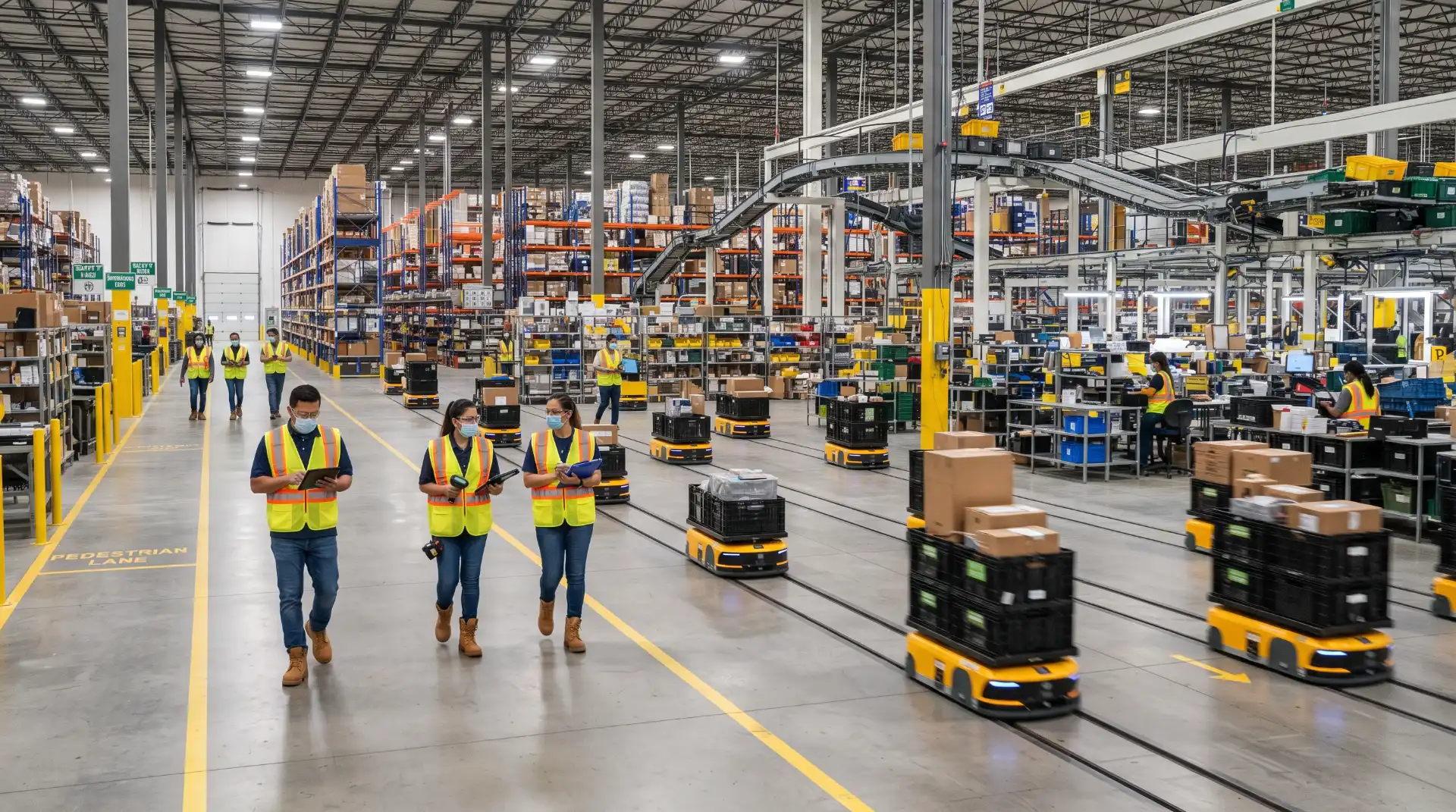
Warehouses present unique robotics issues because automated equipment may travel through areas used by employees.
Industrial mobile robots can independently navigate within their work environments while transporting materials. OSHA explains that these robots may use obstacle or collision avoidance technologies and do not require a seated or standing driver.
A mobile robot does not necessarily remain inside a fixed cage.
It may travel through aisles, move between storage zones, approach workstations, cross intersections, and operate near employees performing manual tasks.
Warehouse safety planning therefore involves more than protecting people from a single robotic arm.
Facilities may need to account for pedestrian movement, intersections, congestion, visibility, changing floor layouts, charging areas, emergency situations, and interactions between several machines.
What Should a Worker Do After a Robot or Cobot Accident?
The circumstances following a robotics accident can vary considerably, particularly when serious injuries require emergency medical treatment.
Workers can generally report the accident according to applicable workplace and state workers’ compensation procedures. Medical documentation can establish the nature of the injury and treatment provided.
When circumstances allow, information about the robot, workstation, surrounding equipment, and accident location may also become useful.
Workers should avoid altering machinery or attempting to personally investigate equipment that could remain dangerous.
A formal investigation may require qualified safety professionals, engineers, equipment technicians, attorneys, or other specialists depending on the nature of the accident.
Employees can also read What to Do After a Workplace Injury for broader information about documenting occupational accidents.
Robot Safety May Become a Bigger Workplace Issue
Automation continues to change the relationship between employees and machines.
Traditional factory robots often worked behind fences. Newer systems may travel throughout facilities, cooperate with employees, respond to sensors, and incorporate increasingly sophisticated software.
NIOSH recognizes that closer human-robot interaction creates emerging occupational risks that researchers do not yet fully understand.
This does not mean robotics is inherently unsafe.
Robots can remove employees from hazardous tasks and reduce exposure to physically demanding work. The challenge is introducing automation without replacing one type of workplace danger with another.
Proper equipment design, hazard assessment, training, maintenance, machine guarding, energy control, and workplace planning can all affect employee safety.
Legal Issues Can Become Complex After a Robotic Equipment Accident
A traditional workplace accident might involve an employee, employer, and single piece of machinery.
A robotics accident may involve considerably more.
The equipment manufacturer may be located in one state. Software may come from another company. A system integrator may configure the production line. An outside contractor may perform maintenance. The employer may operate the facility while another company owns part of the machinery.
Determining which legal rules apply may depend on the worker’s state, employment relationship, cause of the accident, companies involved, and available evidence.
Workers’ compensation rules also vary significantly across the United States.
Someone injured by an industrial robot in California may face different claim procedures, benefit rules, deadlines, and third-party liability standards from a worker injured under another state’s system.
For that reason, general online information cannot determine the outcome of an individual case.
Frequently Asked Questions About Robot Workplace Injuries
Can I File Workers’ Compensation After Being Injured by a Robot?
A job-related robot injury may fall under a state’s workers’ compensation system if the worker and accident meet applicable requirements. Coverage and available benefits depend on state law and individual circumstances.
Can I Sue the Robot Manufacturer?
Possibly, but the existence of a workplace accident does not automatically establish manufacturer liability. A potential product claim depends on issues such as the alleged defect, causation, equipment condition, modifications, state product liability law, and available evidence.
Are Cobots Safer Than Traditional Industrial Robots?
Collaborative applications are designed to permit closer interaction between workers and robots, but hazards can still exist. OSHA notes that workers inside restricted areas may face risks involving robot movement, surrounding equipment, workpieces, and overlapping operating spaces.
What Evidence Matters After a Robot Accident?
Potential evidence may include photographs, videos, maintenance records, robot logs, software records, training materials, safety assessments, equipment manuals, inspection records, witness information, medical documents, and records of modifications or repairs.
Does OSHA Regulate Workplace Robots?
OSHA does not currently have one specific standard covering the entire robotics industry. Existing standards involving machine guarding, hazardous energy, electrical safety, PPE, and other workplace hazards may apply depending on the situation.
Final Thoughts
Robots and cobots may improve productivity while removing employees from some hazardous and repetitive tasks. At the same time, closer interaction between workers and automated equipment creates new workplace safety concerns.
Employees may encounter industrial robotic arms, autonomous mobile robots, automated production systems, collaborative machines, sensors, software, and conventional industrial equipment within the same facility.
When an accident occurs, identifying the cause may require examining both physical and digital evidence.
Workers’ compensation may apply to job-related injuries, while certain accidents could also raise questions involving manufacturers, contractors, maintenance providers, system integrators, or other third parties.
As warehouses and manufacturing facilities continue adopting automation, understanding robot-related hazards may become an increasingly significant part of workplace safety and occupational injury law across the United States.
For authoritative workplace robotics information, visit the Occupational Safety and Health Administration’s Robotics resource or the NIOSH Center for Occupational Robotics Research.